Learning Center Our Enshrinees

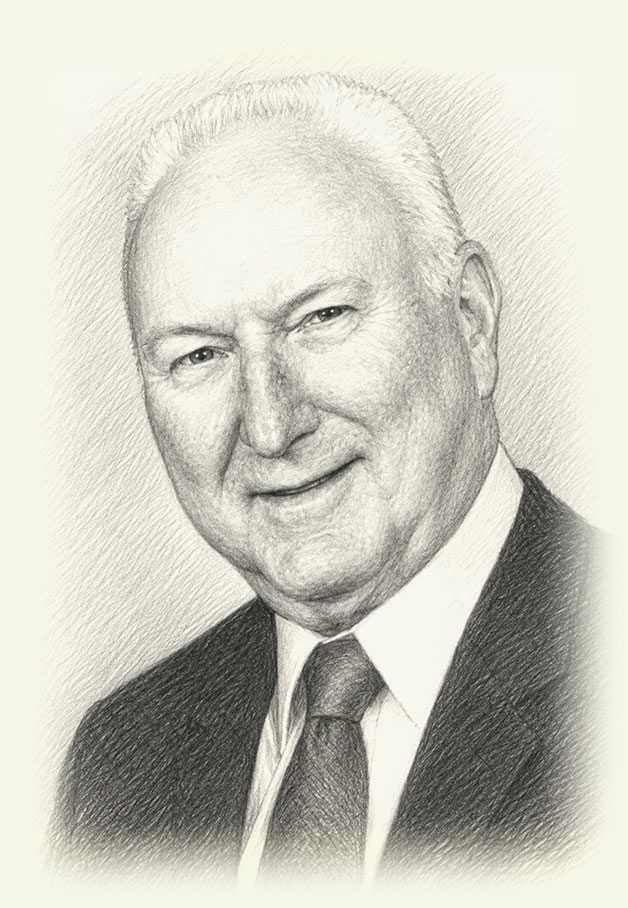
William F. Bahret


  • Assigned to WPAFB’s Avionics Laboratory, where his team was tasked with “defeating” radar by reducing an aircraft’s radar signature.
  • The first true assignment involved understanding the cross-section, or echo size, of targets. The cross-sections of different aircraft could not be measured consistently because the actual radar signatures were unknown. A small aircraft could cause a larger radar signature than a much larger one. Bahret’s team was tasked with figuring out how to consistently analyze and predict these radar cross sections. 
  • Went about discovering objects’ cross-sections using scale models. They worked out of Building 821, the Radar Test Building, on WPAFB, which was called “the Barn” as it was made entirely of wood to reduce radar interference. Here, Bahret’s team built an anechoic chamber that blocked out unwanted radar readings. With this anechoic chamber and their scale models, Bahret and his team discovered that an aircraft’s wings did not affect its front-aspect radar signature; rather, its engine inlet and face, canopy, and antennas accounted for most of the echo.
  • Bahret’s team moved to the Aerial Reconnaissance Laboratory in 1954 and collaborated with the Material Laboratory to produce radar absorbing materials (RAM).
  • Undertook the Passport Visa project, in which Bahret’s team procured an NT-33 trainer and retrofitted it with RAM. Passport Visa was a success in that it provided concrete data supporting RAM, but it also confirmed to Bahret’s team that simply covering an aircraft in RAM was not enough to significantly reduce its radar signature. They also discovered that the most powerful technique for radar “defeating” was shaping.
  • Ultimately, Passport Visa enabled Bahret and his team to identify the fundamental problems in reducing radar cross-section. They would work with the Strategic Air Command in the early 1960s to retrofit the Hound Dog missiles to make them less observable. Bahret and his team’s identification of the key principles of radar signatures allowed other programs, such as Lockheed’s, which produced the world’s first stealth fighter, the F-117, to succeed.

Interested in learning more?

Fill out the form to receive William F. Bahret's full bio.

"*" indicates required fields